
27 Mar 2026
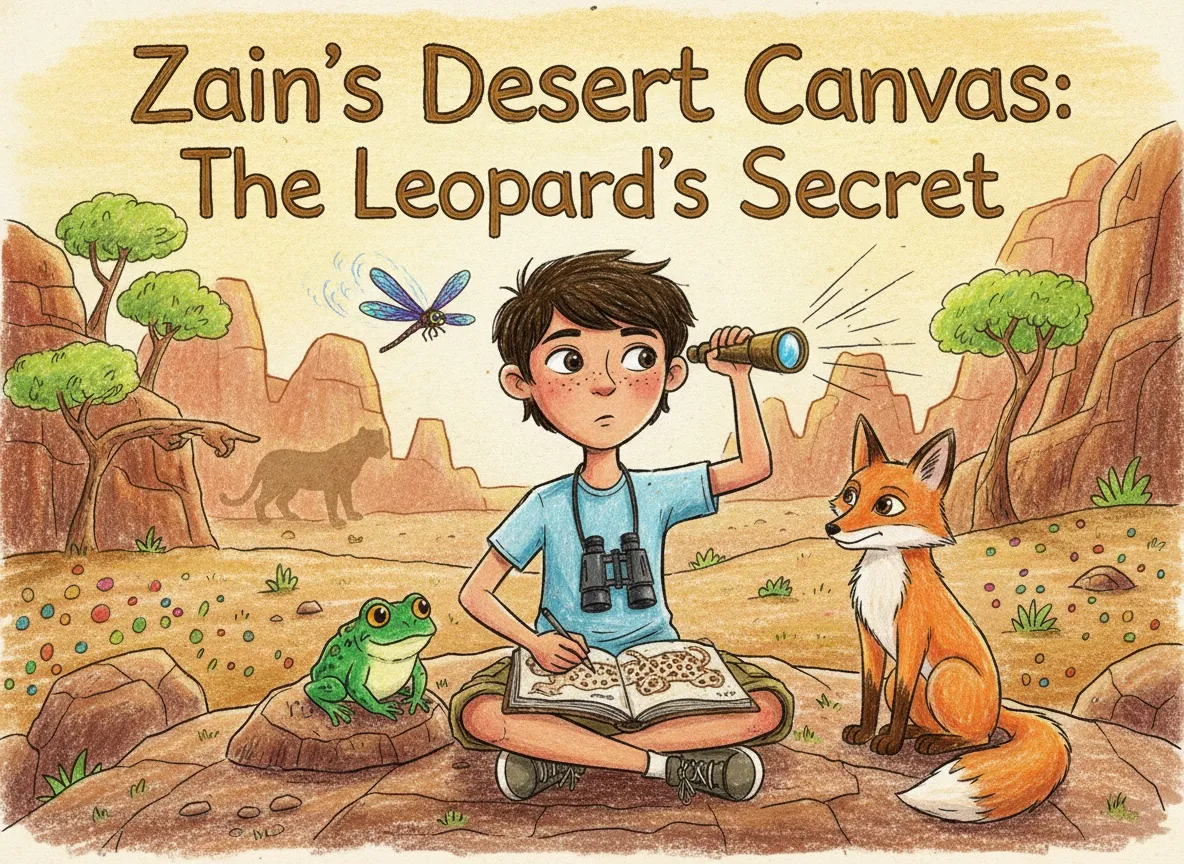
The morning sun, a fiery orange orb, began its slow climb over the jagged peaks of the desert mountains. On a rocky overlook, a young boy named Zain sat, legs dangling over the precipice. Around him, the desert sprawled, a vast canvas of ochre, burnt sienna, and unexpected patches of hardy green. He held a worn sketchbook in his lap, its pages filled with his careful drawings of cacti, scorpions, and the endless, shimmering horizon.
Next to Zain, Puddlejump the Enchanted, a friendly, plump desert toad with emerald skin and big, curious eyes, blinked slowly. Puddlejump was known for his calm demeanor and his surprising knowledge of the desert's hidden corners. On Zain’s other side, Bumblefuzz the Blessed of the Magic Garden, a small, shimmering dragonfly with iridescent wings, zipped and hovered, a tiny whirlwind of iridescent light. Bumblefuzz was always buzzing with energy and an eagerness to discover new things. Rascal the Blessed of the Glass Mountain, a sleek, swift desert fox with intelligent, amber eyes and a tuft of white fur on his chest, lay curled at Zain’s feet, occasionally twitching an ear at the distant cry of a hawk.
Today was a special day for Zain. He wasn’t sketching a new discovery from their recent adventures. Today, he was trying to remember something, to bring it back to life on paper. He closed his eyes, picturing the sharp lines and graceful curves of a creature he had only glimpsed once, a few weeks ago, during a rare desert twilight.
“What are you trying to capture today, Zain?” Puddlejump croaked softly, his voice a low rumble. He peered at the blank page, then at Zain’s thoughtful face.
Zain opened his eyes, a determined glint within them. “The Arabian leopard,” he whispered, as if speaking its name too loudly might scare it away even in his memory. “I saw one, just for a moment. Its spots were so dark, its movements so quiet. I want to draw it perfectly.”
The others knew about Zain’s fascination with the elusive Arabian leopard. It was one of the rarest big cats in the world, a ghost of the mountains, rarely seen by human eyes. Zain considered it a personal challenge to draw every creature of the desert, and the leopard was his ultimate prize.
He picked up his charcoal pencil, its tip sharp and ready. He started with the powerful, sloping back, then the elegant curve of the neck. But as he tried to add the spots, he hesitated. Were they perfect circles? Rosettes? How many spots were on its flank? He frowned, trying to recall the exact pattern.
Bumblefuzz zipped closer, landing on the edge of the sketchbook. “Oh, spots! Like the stars at night, but all in a pattern!” he chirped, too excitedly, making Zain flinch. “Or like the patterns on a desert beetle!”
Puddlejump sighed. “Bumblefuzz, the Arabian leopard’s spots are quite unique. They are not random, nor simple circles. They are rosettes, often with a darker center.” He croaked thoughtfully. “But remembering such detail from a fleeting glance is difficult, even for a human.”
Rascal lifted his head, his amber eyes keen. “I have seen them. From a distance, usually. They blend almost perfectly with the rocks. That’s why. Their fur is like the shadows and the light on the stones themselves.”
Observation, whether artistic or scientific, is key to understanding and protecting the natural world. Every effort to learn and appreciate nature, no matter how small, contributes to its preservation.
Story theme is The interconnectedness of art and science in wildlife conservation through detailed observation.
Originally published on StoryBee. © 2026 StoryBee Inc. All rights reserved.
0 likes
Zain nodded, grateful for their input. He erased a few tentative lines. “You’re right, Rascal. It was almost invisible. That's why picturing it clearly is so hard. It was like seeing a magic trick, then trying to explain it.”
“Perhaps we can help you remember,” Puddlejump suggested. “Recall the environment where you saw it. What was around it?”
Zain closed his eyes again. “It was near the old wadi, where the date palms grow. The sun was setting, making everything orange. It moved like water over the rocks, so smoothly.” He opened his eyes, a flicker of an idea passing through his mind. “And the rocks! They were the same color as its fur, only darker, with lighter patches.”
“Aha!” Bumblefuzz exclaimed, doing a little aerial flip. “So the art of the leopard is in its camouflage! Like a chameleon, but furrier!”
“Precisely,” Puddlejump agreed. “Nature’s art. Every color, every pattern, serves a purpose.”
Zain began to sketch again, this time focusing not just on the leopard itself, but on how it interacted with its background. He drew the faint outline of a rocky ledge, the shadows already lengthening. Then, carefully, he started to add the leopard’s form, making sure its colors and shapes flowed into the imagined rocks.
But the spots still troubled him. He tried to draw small, round circles, then larger, more irregular ones. None of them looked quite right. He sighed in frustration, his charcoal smudging the paper.
“It’s not just about what it looks like, Zain,” Rascal said, surprising everyone with his philosophical tone. “It’s about how it is. A hunter. Fierce but quiet. Its spots aren't for show; they’re for survival.”
“Rascal has a point,” Puddlejump rumbled. “The patterns are for blending, not standing out. Think about how the light hits the rocks, how shadows play tricks on your eyes. The leopard’s spots mimic those natural patterns.”
Zain looked at his drawing, then at the vast desert before him. He picked up his binoculars, a gift from his grandfather, and scanned the distant mountains. He focused on a cluster of rocks, observing how the sunlight created patches of light and shadow, how some rocks had lichen patterns that looked almost like animal prints.
“I see it!” he exclaimed, lowering the binoculars. “The spots aren’t just dark marks. They're like pieces of shadow, broken up by lighter fur. That’s how it disappears!” He began to sketch with renewed vigor, experimenting with broken lines and shaded interiors for the rosettes. He drew a few, then paused, comparing them to the patterns he saw on the distant rocks. It was better, but not perfect.
“Do you know why scientists are so interested in these patterns?” Puddlejump asked, his eyes gleaming with a hint of a lesson about to unfold. “It’s not just for drawing, Zain. It’s for understanding.”
Zain looked up, intrigued. “Understanding what?”
“Every animal, every plant on Earth, is like a living puzzle,” Puddlejump explained. “Scientists, like artists, observe. They look closely at things. They measure, they count, they compare. For animals like the Arabian leopard, knowing their unique spot patterns can help identify individual leopards.”
Bumblefuzz zipped around, creating tiny vortexes in the air. “Like fingerprints for cats!” he chirped. “Every one is different!”
“Precisely, Bumblefuzz,” Puddlejump confirmed. “Each Arabian leopard has a unique set of rosette patterns. Scientists use special cameras, often called camera traps, that are hidden in the desert. When a leopard walks by, the camera takes its picture. Then, researchers can look at the photos and compare the spot patterns to a database. That way, they can tell if it’s a leopard they’ve seen before, or a new one to the area.”
Zain’s eyes widened. “So my drawing isn’t just about making art, it’s like… scientific observation?”
“Exactly!” Puddlejump said, clearly pleased. “When you try to draw something accurately, you are practicing observation, which is a fundamental part of science. And these observations, these detailed descriptions of an animal’s appearance, are crucial for conservation efforts.”
“Conservation?” Zain repeated the word, tasting its sound. He remembered his grandfather talking about protecting the desert’s precious creatures.
“Yes, conservation means protecting animals and their homes,” Rascal chimed in, stretching lazily but clearly listening intently. “The Arabian leopard is endangered. There are very few left.”
“And why is it endangered?” Zain asked, his voice softer now, a sense of responsibility dawning on him.
Puddlejump took a deep breath. “Many reasons, alas. Loss of habitat, meaning their homes are getting smaller as human towns expand. Sometimes, they are hunted unfairly. And sometimes, their prey, the animals they eat, become scarce.”
“So, by identifying individual leopards through their spots,” Bumblefuzz interjected, “scientists can track them! See where they go, what they eat, if they have babies!”
“That’s right, little one,” Puddlejump said warmly. “By understanding where leopards live, what they need to survive, and how many there are, scientists can work with people to create safe areas for them, to ensure they have enough food, and to protect them from harm. Your accurate drawing, Zain, is a step towards understanding them better.”
Zain looked down at his sketchbook. He wasn’t just trying to make a beautiful picture anymore. He was trying to contribute, in his own small way, to the survival of this magnificent creature. He realized that art wasn't just about beauty; it was also about truth, and truth could help save lives.
He pulled out a brand-new page from his sketchbook. He decided to start fresh. This time, he wouldn’t just draw from memory. He would draw with purpose. He used his charcoal to carefully outline the powerful body of the leopard, recalling its agile movements. He then focused on the rosettes, trying to mimic the complex patterns of light and shadow he had observed on the desert rocks.
He worked slowly, meticulously. He drew some rosettes with open centers, others more closed. He varied their sizes and shapes, just as he imagined they would be on a real leopard. He even added a faint shimmer to the fur, remembering how the setting sun had caught the animal’s coat.
Hours passed. The sun climbed higher, then began its descent, painting the sky in hues of pink and gold. Puddlejump offered quiet encouragement, Bumblefuzz made occasional, helpful observations about the desert’s textures, and Rascal, now fully awake, watched Zain’s hand move with a concentrated gaze. Binoculars lay nearby, a reminder of the scientific tool that helped him see the patterns of nature more clearly.
Finally, Zain leaned back, charcoal dust smudging his cheek. He held up the sketchbook. On the page, an Arabian leopard, vibrant and alive, seemed to emerge from the paper. Its eyes, he had made sure, held a wild, intelligent spark. And its spots, while not identical to every real leopard, captured the essence of their unique, natural camouflage. They were intricate, varied, and blended seamlessly with the imagined desert background.
“It’s… beautiful, Zain,” Puddlejump croaked, genuinely impressed. “You didn’t just draw a leopard; you understood it.”
Bumblefuzz zipped around the drawing, admiring every detail. “It looks like it could walk right off the page! You can almost hear its silent footsteps!”
Rascal approached the drawing cautiously, sniffing it gently. He looked at Zain, then back at the drawing. “It is… accurate,” he said, a rare compliment from the usually reserved fox. “It captures its spirit.”
Zain smiled, a wide, proud grin. He felt a different kind of satisfaction this time. It wasn't just about making a pretty picture. It was about learning, observing, and understanding. He saw how the act of drawing, of carefully replicating nature, was a powerful tool. It was art, but it was also science. It was a way to connect with the world, to appreciate its wonders, and to contribute to its protection.
“So, my art can help protect the leopards?” Zain asked, looking from his drawing to the vast desert where such creatures still roamed.
“Every act of understanding helps, Zain,” Puddlejump confirmed. “When you draw something accurately, you learn more about it. When you learn more about it, you care more about it. And when you care, you want to protect it. Art, observation, and science, they are all working together to keep the wonders of our world safe, like the magnificent Arabian leopard.”
Zain carefully closed his sketchbook, safeguarding his drawing. He knew this wasn't just a picture; it was his contribution, his way of telling the story of the Arabian leopard, and a testament to how art and science, like the desert and its hidden creatures, were deeply connected, each helping the other survive and thrive.
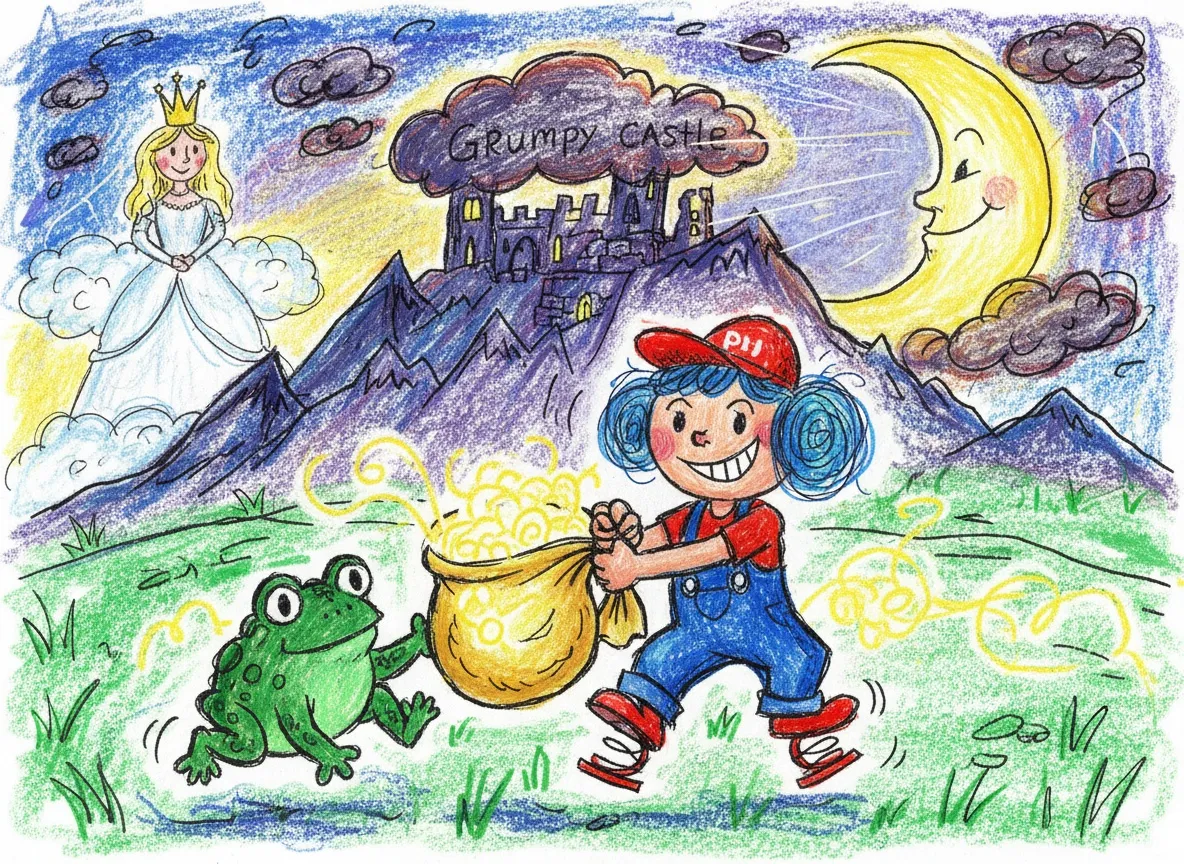
Read children story - La Nuit Douce de Pip et la Lune Coquine
Lorsque la lune disparaît derrière le Château des Nuages Grognons, Pip, le plombier joyeux aux chaussures à ressorts, et son ami Toadie, la grenouille, se lancent dans une aventure nocturne captivante. Ils doivent affronter des défis pour récupérer un sac de rayons de lune afin de rétablir la lumière douce de la Reine Luna et permettre à toutes les créatures de dormir paisiblement. Une histoire douce pour l'âge 2-4 ans, parfaite pour le coucher.
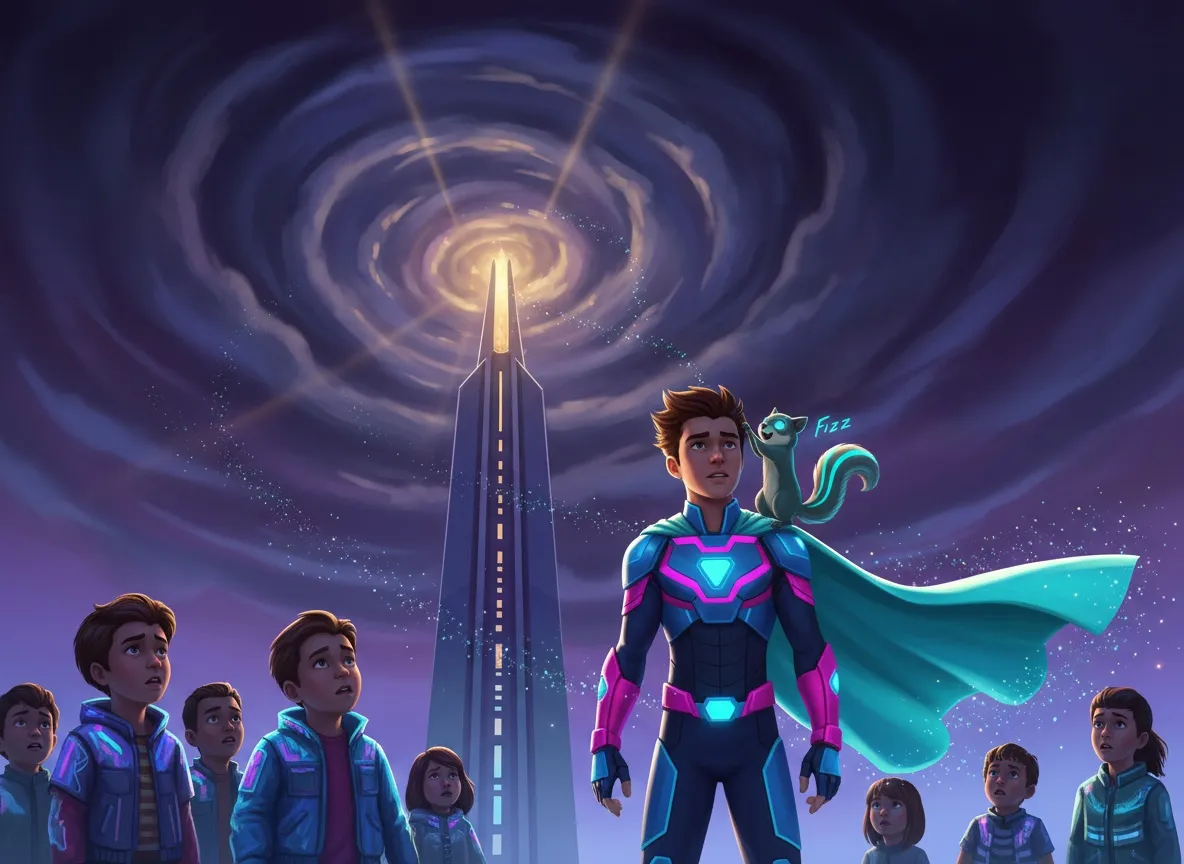
Read children story - Captain Bright's Cloud Crusade
Captain Bright and Fizz the flying squirrel must save Sunshine City from Gloom Clouds! A brave kid hero discovers that true power comes from everyone working together.
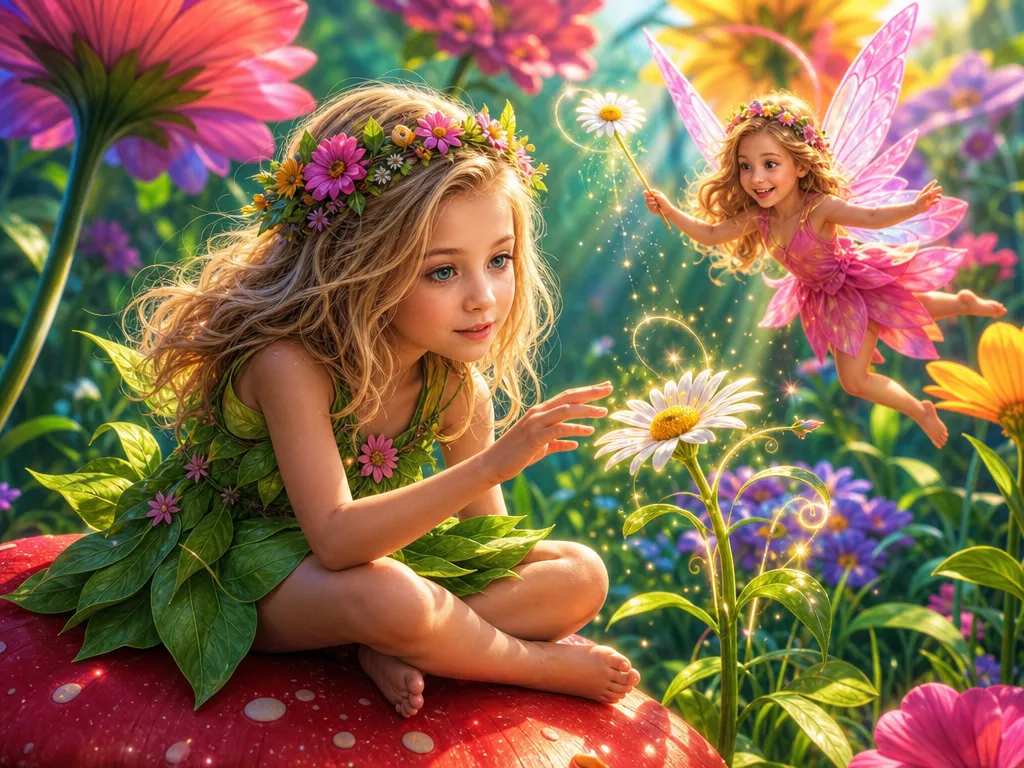
Read children story - Lila's Wobbly Wobble Dance
Join Lila, a wingless meadow fairy, as she discovers a special gift: making plants dance. When a terrible drought hits, can her unique 'wobbly wobble dance' save her home?
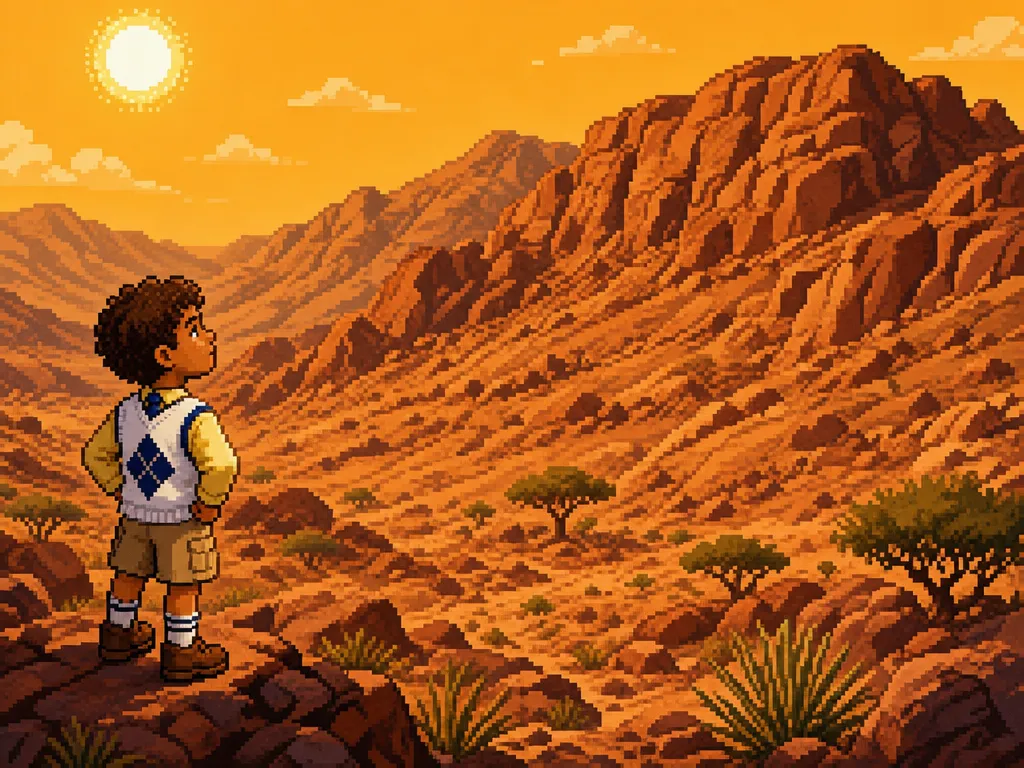
Read children story - Salim and the Vanishing Leopard's Lesson
Join Salim, a curious boy, on a desert hike where he uncovers the amazing secret of the Arabian Leopard's camouflage. An engaging superhero story for 6-10 year olds about blending in.
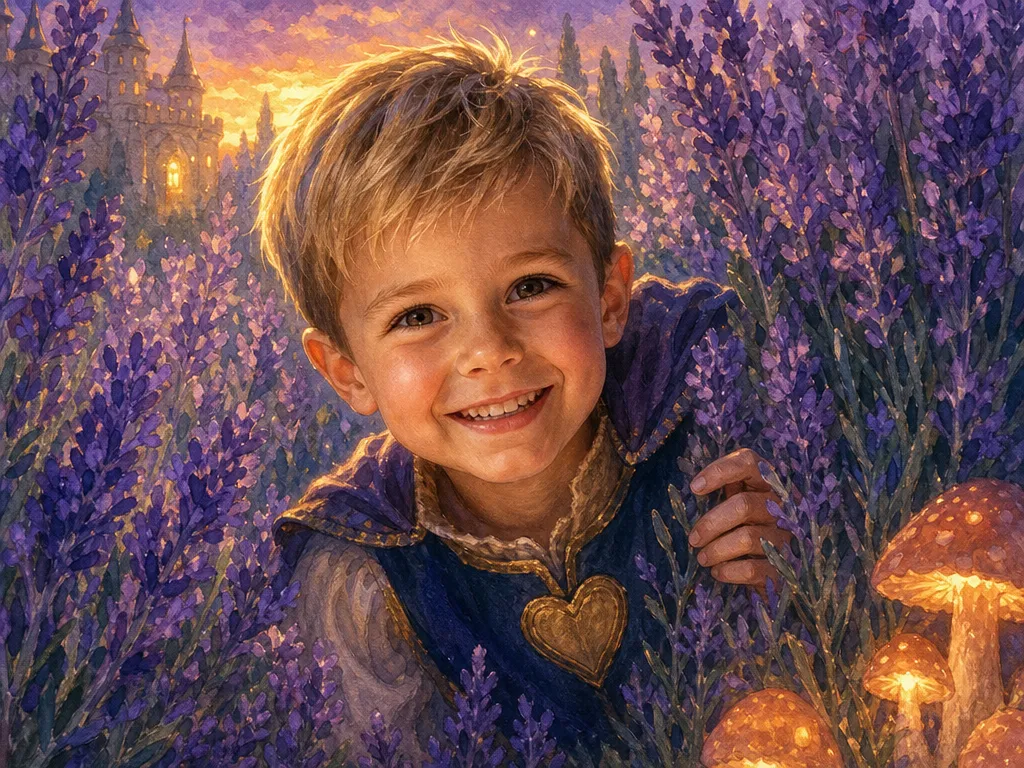
Read children story - Prince Oliver and Ember's Blooming Friendship
Prince Oliver discovers true magic befriending Ember the lonely dragon in an enchanted garden. A heartwarming fairy tale for ages 6-10 about kindness and friendship.
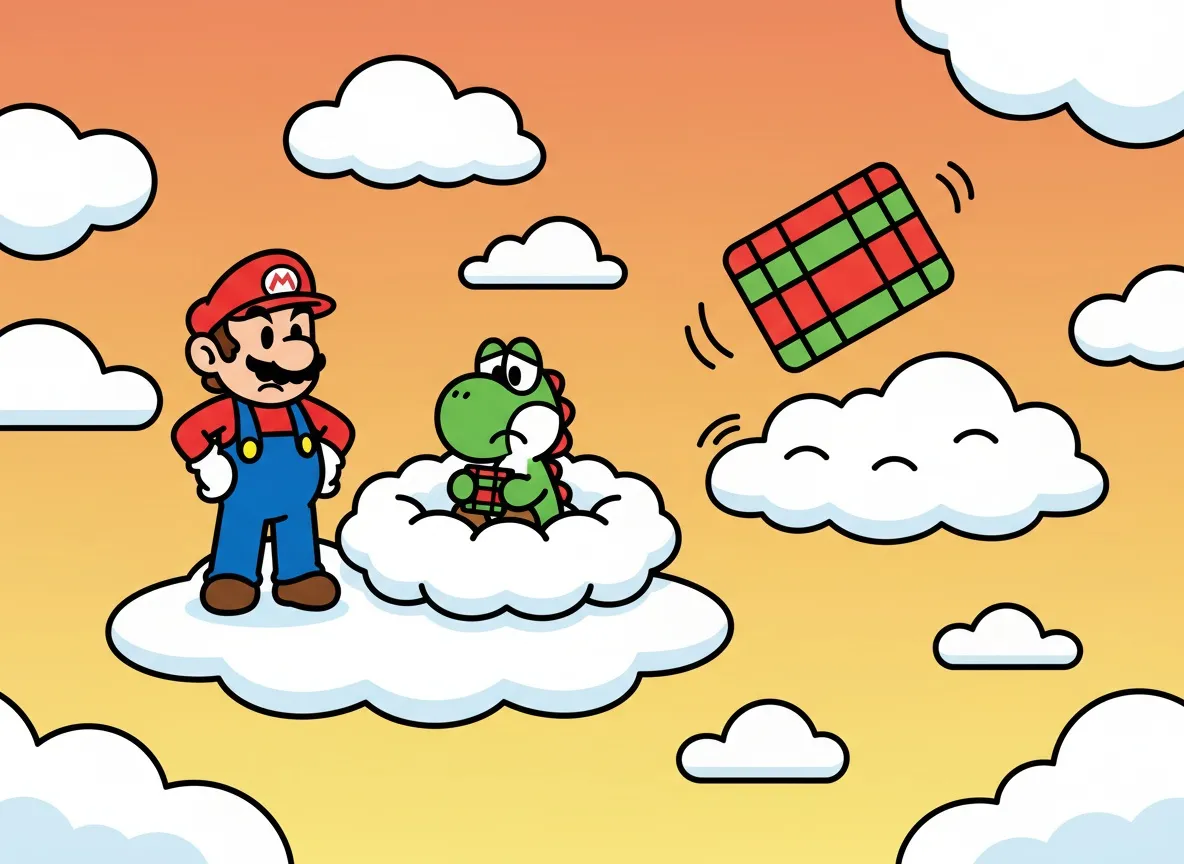
Read children story - Mario's Big Cloud Bounce for Yoshi's Blankie
Yoshi's blankie is lost in the clouds! Mario takes a giant bounce with Puffy's help to get it back, for ages 2-4. A cozy cloud adventure bedtime story.