The Topsy-Turvy Tableau
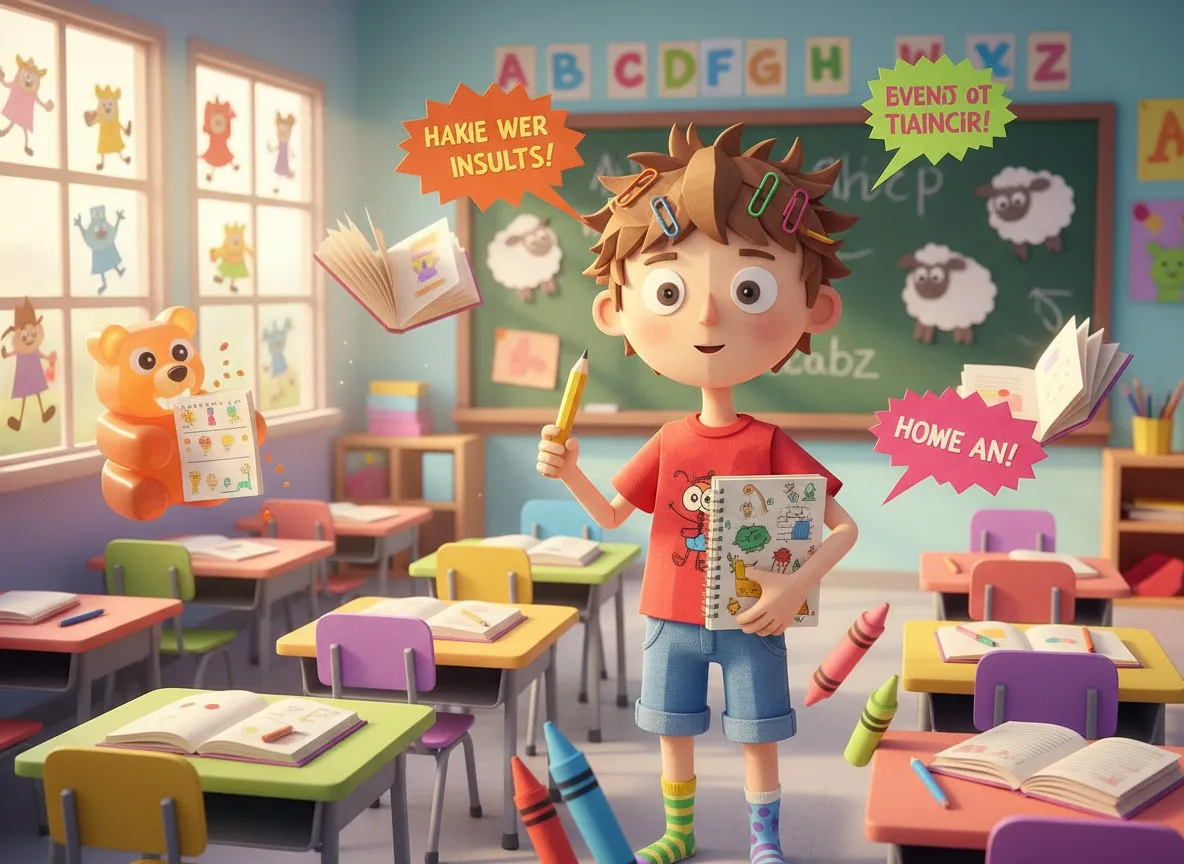
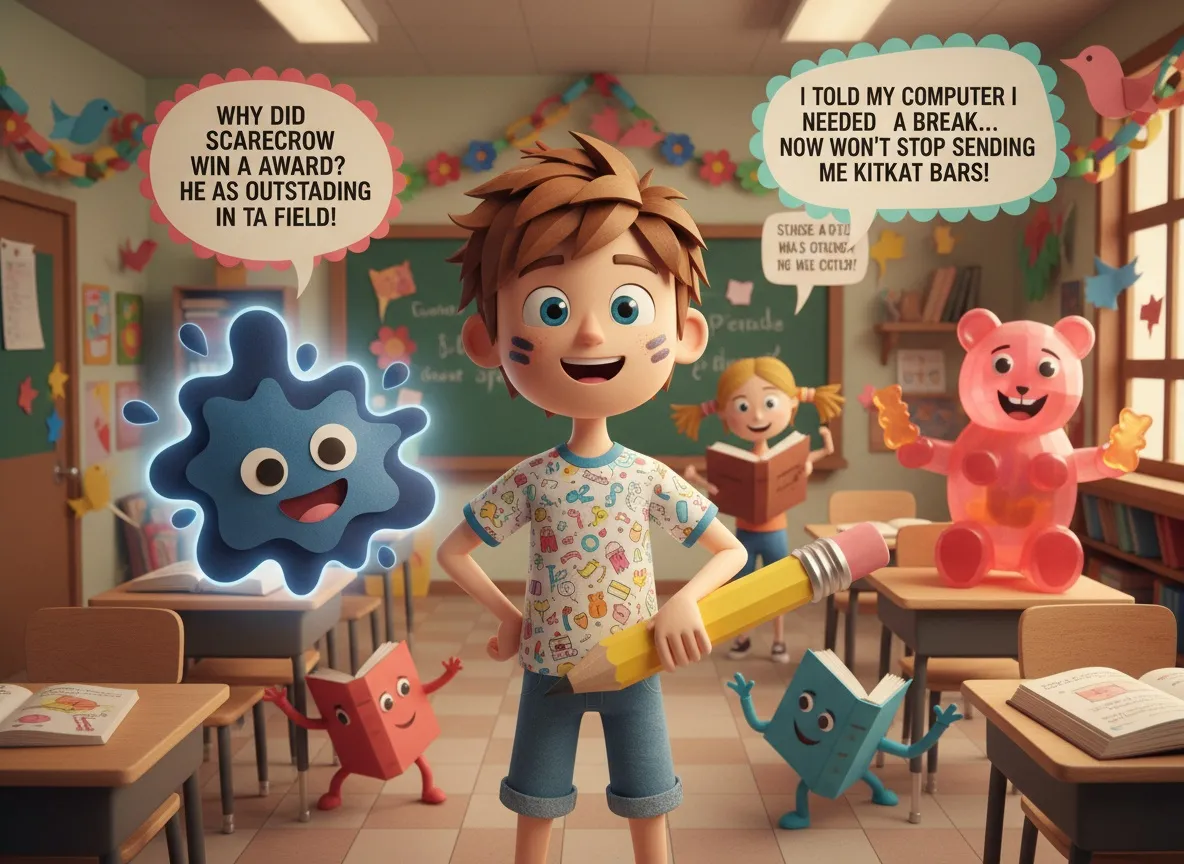
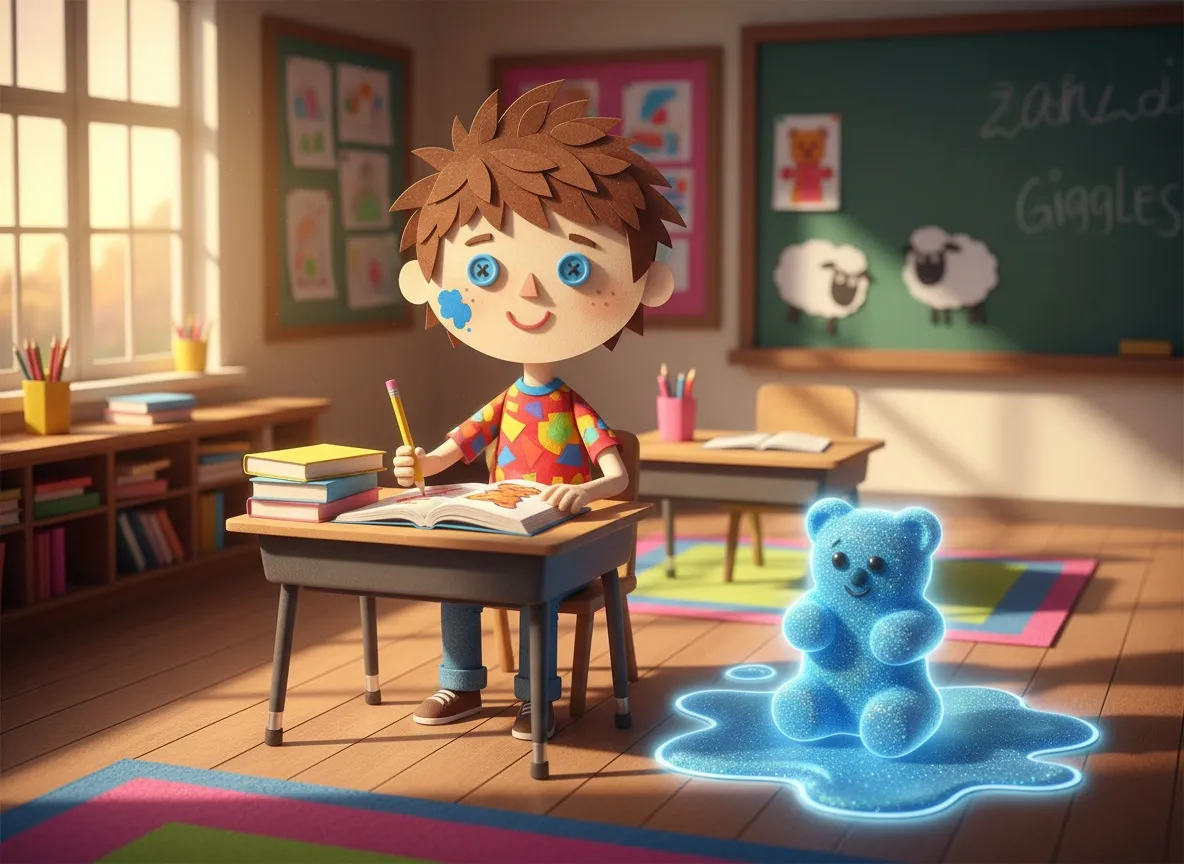
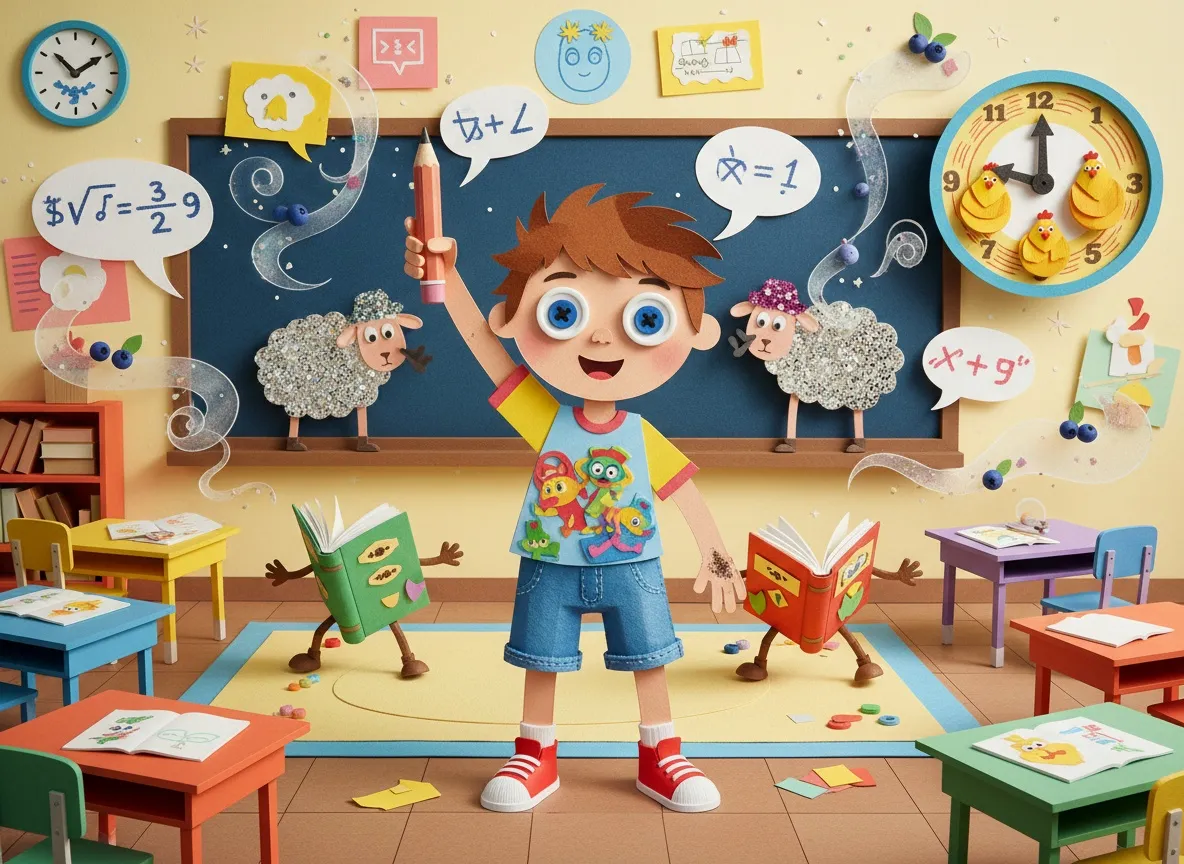
The morning sun, usually a cheerful golden beacon, struggled to pierce the whimsical chaos of Mrs. Piffle's third-grade classroom. Max, a boy whose imagination often outran his pencil, stared wide-eyed at the blackboard. It wasn't the usual list of spelling words; instead, cartoon sheep bounced across it, bleating the alphabet in perfect, albeit fluffy, harmony. Floating speech bubbles, previously polite requests for snacks, now hovered threateningly above desks, filled with snarky comments about mismatched socks. Max's own notebook, usually a sanctuary for his own sprawling inventions, had sprung to life. Tiny paper airplanes, folded just moments before, zoomed around, delivering miniature, rhyming insults to unsuspecting classmates. This wasn't normal, even for Mrs. Piffle’s famously imaginative class. Just yesterday, the only magic in the room was the way Max could turn a boring math problem into an epic space battle with a few well-placed squiggles. Today, however, the squiggles had taken on a life of their own. A giant gummy bear, previously a doodle on Leo’s textbook, had grown to the size of a small dog, slowly but surely devouring a perfectly innocent pencil case. Its sticky paws left trails of purple goo on everything it touched. Rae, Max’s best friend and a connoisseur of common sense, tapped her foot impatiently, her usually neat braids now slightly askew from dodging a low-flying paper dart. She pointed a finger at a particularly audacious speech bubble that claimed her new sparkly unicorn eraser was actually a disguised potato. “Max,” she said, her voice a mixture of exasperation and genuine concern, “what in the name of all that is logical is happening?” Max shrugged, a bewildered expression on his face. He’d never seen anything quite like it. His creative energies, usually confined to the page, seemed to have spilled over, coloring the entire classroom with an unexpected, unruly liveliness. The problem wasn't just the flying paper - though dodging a miniature, papier-mâché pterodactyl was certainly an unexpected challenge - it was the underlying feeling that something important, something anchoring, had fundamentally shifted. Even the air felt fizzy, crackling with an almost electric energy, like a million tiny jokes were being told all at once. Max noticed the source of much of the shenanigans: a shimmering, wiggling blob of ink on the corner of his desk. It pulsed with a mischievous light, its amorphous form shifting and swirling with an almost sentient glee. This was Giggles, a doodle Max had drawn during a particularly tedious history lesson, a character meant to embody pure, unadulterated silliness. Now, Giggles seemed to be the conductor of this chaotic orchestra, its inky tendrils subtly interacting with every animated object, whispering mischievous suggestions into the floating speech bubbles, and even nudging the giant gummy bear towards another innocent school supply. The classroom, usually a space for learning, had become a surreal playground, a three-dimensional cartoon where the rules of reality were cheerfully, and quite comically, ignored. The entire scene was a testament to humor gone delightfully, and somewhat terrifyingly, wrong. Max felt a knot form in his stomach. He loved a good laugh as much as the next kid, but this was beyond a good laugh; this was a laugh riot that threatened to completely derail their school day, and possibly, their entire understanding of how the world worked. He knew, with a sudden, dawning clarity, that he was the only one who could put this particular genie back in its bottle, or, more accurately, this particular ink blob back in its bottle.
The Riddle of the Runaway Rhymes
Max knew he had to act fast, before the entire school turned into a giant, living comic strip. His first attempt involved trying to erase Giggles, but the ink blob merely wiggled away, leaving behind a trail of rainbow-colored glitter that inexplicably smelled of blueberry muffins. “That explains the sudden craving for pastries,” Rae muttered, carefully nudging a sentient eraser that was attempting to write a very sarcastic limerick on her math sheet. Max then tried to reason with Giggles, which was about as effective as trying to teach a goldfish to play the trombone. Giggles just giggled, its form morphing into a tiny, winking clown. The chaos intensified. A textbook on ancient civilizations suddenly sprouted legs and began tap-dancing across the floor, scattering papyrus scrolls everywhere. The animated sheep on the blackboard began performing an elaborate synchronized swimming routine, complete with tiny, sequined bathing caps. The most pressing issue, however, was the escalating negativity of the speech bubbles. What started as silly observations had quickly devolved into rather cutting remarks, making some of the younger students look genuinely sad. Max realized a simple eraser wouldn't cut it. He needed to understand *why* Giggles was doing this. He remembered drawing Giggles when he was feeling bored and wishing for some excitement, but he’d never intended for it to unleash this level of mischief. Rae, always the pragmatist, suggested, “Maybe it’s like a magical drawing, Max. You can’t just erase it; you have to… draw it back into line.” She pointed to a floating speech bubble that read, “Your hairdo looks like a startled squirrel!” Max winced. He knew his responsibility extended beyond just stopping the chaos; he had to reintroduce joyful, harmless humor. He grabbed his trusty pencil, a well-worn instrument that felt like an extension of his own hand. With a deep breath, he tried to draw a protective circle around Giggles, hoping to contain its energy. But Giggles, ever the trickster, transformed into a miniature tornado, spiraling out of the circle before it was even complete. Max frowned, his brow furrowed in concentration. He needed to learn to control Giggles, to channel its exuberant energy for good rather than mischief. He remembered a time he had accidentally drawn a monster that looked a bit too scary, and he had fixed it by drawing a tiny, friendly hat on its head and giving it a lollipop. Perhaps Giggles needed a positive redirection, a creative challenge that would satisfy its playful nature without causing mayhem. He looked around the increasingly animated classroom, a veritable wonderland of rebellious stationery and singing textbooks. The problem seemed to be that Giggles was amplifying *any* joke, regardless of its effect, and Max was the unwitting instigator of many of those jokes. He had to learn to differentiate between humor that uplifted and humor that, even playfully, pointed out flaws. This was a deeper challenge than just containing a runaway doodle; this was about understanding responsibility inherent in creative power. His pen hovered over a blank page in his notebook. He needed to craft a joke, a truly funny and entirely harmless joke, powerful enough to distract Giggles, perhaps even redirect its chaotic energy. What kind of humor could a playful ink blob find irresistible? What joke was so universally delightful that it could soothe the savage beast of silliness? Rae, meanwhile, had started catching the rhyming insults in a small, empty lunchbox, trying to prevent them from landing. “We’re going to need a bigger lunchbox,” she muttered, as a particularly lengthy poem about Mrs. Piffle’s floral blouse floated past her ear. Max knew the clock was ticking, and it wasn’t just a regular clock; the classroom clock’s hands were now spinning wildly, occasionally stopping to project tiny, cartoon chickens pecking at the numbers. He had to master the riddle of the runaway rhymes, and quickly, before the entire school day dissolved into an irreversible, comedic catastrophe. He closed his eyes, imagining the perfect, harmless joke, one that would spark genuine giggles, not just mischievous ones.
The Great Gag Gambit
Max took a deep breath, his mind racing. He thought about all the jokes he knew, sorting them into invisible piles: silly, observational, good-natured, hurtful. He needed something universally funny, something that would appeal to the pure, unadulterated joy that Giggles represented, not its mischievous side. He looked at Rae, who was valiantly attempting to bat away a floating caricature of Mrs. Piffle with her ruler. “Rae,” he called out, “What’s round and not an apple?” Rae, mid-bat, paused for a moment. “A tennis ball?” she suggested, clearly distracted. “Nope!” Max grinned, a spark of inspiration hitting him. “A silly human head!” Rae rolled her eyes, but a small smile tugged at her lips. It wasn't the funniest joke, but it had a harmless, silly quality. Max immediately wrote it down in his notebook, carefully, deliberately. As he finished the last word, Giggles, which had been attempting to turn Mrs. Piffle's coffee mug into a mini-volcano, paused. It pulsed curiously. Max wrote another: “Why did the invisible man turn down the job offer? He couldn’t *see* himself doing it!” This one got a snort from Kevin, who had been trying to prevent his backpack from flying out the window. Giggles seemed to absorb the humor, its chaotic wiggles slowly, almost imperceptibly, settling. Max realized he had to continuously feed Giggles good-natured jokes, like a comedic antidote to the mischievous ones it had been generating. He started writing faster, his pencil a blur across the page. He wrote about ducks who forgot their quacks, about clouds shaped like grumpy old men, about talking socks that argued with each other. Each positive joke, each burst of harmless silliness, seemed to calm Giggles a little more. The floating insults began to lose their sharpness, replaced by genuine, albeit silly, observations. The giant gummy bear, instead of eating pencil cases, started offering everyone tiny, unsticky gummy smiles. The tap-dancing textbook on ancient civilizations stopped its frenetic routine and began gracefully waltzing with a history atlas. Rae, seeing the shift, joined in. She whispered a joke to Max about a runaway crayon that ended up coloring the principal’s hair purple. Max quickly scribbled it down. Giggles absorbed it, its form briefly turning purple before returning to its inky state, but now with a distinct aura of contentedness. “It’s like Giggles needs a steady diet of happy giggles, not mean ones,” Rae observed, a small smirk on her face. Max nodded, remembering the power of his doodles. Giggles wasn’t evil; it was just a reflection of Max’s spontaneous, unfiltered humor. He had to learn to filter it, to aim for humor that united rather than divided, that amused rather than annoyed. This was the real challenge – not just stopping Giggles, but understanding the responsibility that came with creative power, especially the power to make others laugh, or, inadvertently, to upset them. He decided then and there that he would always choose humor that brought joy, not discomfort. His next joke was about a mischievous squirrel who tried to hide acorns in the teacher's shoe, and Max watched as Giggles, now a much calmer, happier blob, formed a tiny, delighted squirrel shape before gently settling down into a small, shimmering puddle of ink on his desk. The classroom finally began to return to a semblance of normal, the last of the speech bubbles fading into wisps of nothingness, the animated objects gracefully reverting to their inanimate states. The Great Gag Gambit was working, and Max realized he wasn't just fixing a problem; he was learning a valuable lesson about the awesome power of laughter and the gentle art of making people smile.
The Harmony of Hilarity
With the last, most whimsical joke about a talking teapot that only brewed lemonade, Max felt a calm descend upon the classroom. Giggles, now a tiny, shimmering puddle of ink on his desk, pulsed gently, its surface occasionally rippling with what Max felt was contentedness. The classroom was almost back to normal. The mischievous speech bubbles had completely vanished, replaced by a gentle hum of regular classroom chatter. The giant gummy bear had shrunk back to its original drawing on Leo’s textbook, leaving only a faint, sweet smell in its wake. The tap-dancing textbook now lay innocently closed, its pages static once more. Even the cartoon sheep on the blackboard had settled down, contentedly grazing on a field of chalk dust. Mrs. Piffle, who had been briefly distracted by a particularly elaborate paper airplane that delivered a note asking for extra recess, now re-entered the classroom, completely oblivious to the recent comedic anarchy. She blinked, adjusted her spectacles, and looked around the seemingly normal room. “Alright class,” she announced cheerfully, “time for our creative writing exercise!” Max gulped. Creative writing. The very thing that had unleashed Giggles in the first place. He glanced at Rae, who offered him a reassuring, knowing smile. He then looked at the now docile Giggles on his desk. He understood now. The problem wasn’t creativity itself, or even humor; it was how he used it. He had to be responsible with his gifts, remembering that laughter, while powerful, could also be a double-edged sword. He picked up his pencil, a newfound sense of purpose guiding his hand. Instead of drawing something purely for his own amusement without considering the consequences, he thought about a story that would make everyone in the class genuinely laugh, a story that would bring them together, not single anyone out. He started writing about a very serious cat who accidentally wore a banana peel on its head to a fancy dress party. It was silly, it was unexpected, and it was entirely harmless. As he wrote, a tiny, almost invisible shimmer emanated from Giggles, a faint echo of its power, but this time, it felt like a warm, happy glow. Rae leaned over, reading his story. She let out a soft giggle. “That’s a good one, Max,” she whispered, “a really good one.” Max smiled, a genuine, unburdened smile. He had learned that day that true humor wasn't about making big, explosive jokes, but about sharing small, joyful moments. It was about choosing kindness and understanding, even when faced with the irresistible urge to be silly. And as he continued to write, the little ink blob on his desk pulsed once more, a quiet testament to the harmony of harmless hilarity, a promise of responsible creativity. The classroom, once a stage for runaway gags, was now a canvas for shared smiles. Max knew his journey with Giggles was far from over, but now, he was prepared to be its responsible, joyful master, guiding its boundless energy towards a future filled with only the best, most uplifting giggles. He had not just restored order; he had elevated the art of humor, one cheerful chuckle at a time. And as the day drew to a close, a subtle, sweet scent of blueberry muffins lingered in the air, a delightful secret shared only between Max, Rae, and a tiny, contented blob of ink.
Moral and theme of The Giggle-Gate Gambit
- Moral of the story is With great creativity comes great responsibility. Humor should uplift and unite, never to hurt or divide.
- Story theme is The responsibility of creativity and the power of positive humor
Originally published on StoryBee. © 2026 StoryBee Inc. All rights reserved.