
24 Jul 2026 · 10-minute read · Everyday Life

Barnaby Button, a boy whose imagination soared higher than any rocket, was having a rather peculiar Tuesday. His family's ancient toaster, affectionately nicknamed "Sparky" for its alarming tendency to shoot charred bread like miniature missiles, had decided to achieve sentience. Or, at least, it was now making humming noises that sounded suspiciously like a kazoo trying to play the "Star Wars" theme.
"Mom! Sparky's humming again!" Barnaby called from the kitchen, peering at the trembling toaster with wide, curious eyes. "I think it's trying to communicate!"
His mom, a brilliant robotics engineer who often mistook Barnaby's imaginative outbursts for actual emergencies, walked in, wiping grease from her brow. "Communicating, Barnaby? Or is it just short-circuiting its way through another breakfast?"
Barnaby, undeterred, leaned closer. "No, it's different this time! It sounds like... a distress signal!" He tapped the toaster gently. "Are you trying to tell me something, old friend? Did you see the Space Force? They're always talking about how space science is changing the world, and maybe Sparky knows a secret!"
Just then, the TV chirped to life, displaying an emergency broadcast. A stern-faced, slightly flustered woman in a gleaming silver uniform appeared. "Greetings, Earthlings!" she boomed, her voice projecting with an air of theatrical urgency. "This is General Astra Nova of the United Earth Space Force! We have a… a slight predicament. Our advanced Moon-Bots, designed to collect lunar samples and perfect our interstellar lunch-delivery service – I mean, scientific data – have gone rogue! We suspect a cosmic prankster has reprogrammed them!"
Barnaby gasped. "See! I told you! Sparky knew!" He looked at his mom, his eyes sparkling with a mission. "Mom, we have to help the Space Force! We have to find the missing Moon-Bots! Imagine all the wonderful things space science can do, like making sure we never run out of moon cheese!" His enthusiasm for lunar dairy products was unparalleled.
His mom chuckled. "Well, Barnaby, the Space Force certainly has their work cut out for them. But 'rogue' robots usually mean a programming glitch, not a cosmic prankster. It's a classic problem in robotics and automation! We need to understand how these machines work to fix them. And that, my dear, means using our brains and a little bit of STEM magic!"
Suddenly, Sparky let out a series of frantic beeps, then projected a shaky holographic image onto the kitchen wall. It showed a blurry picture of what looked like a giant, grumpy-looking space squirrel wearing a tiny, ill-fitting astronaut helmet. Beneath it, a line of jumbled code scrolled by.
General Nova, still on the TV, shrieked. "Grumbles the Galactic Squirrel! I knew it! His acorn-hoarding habits know no bounds! He must have jammed their navigation systems to store his nutty treasures!"
Barnaby’s seven-year-old neighbor, Penelope "Penny" Pixel, a whiz with all things digital, burst through the back door without knocking, as was her custom. Penny, armed with a tablet and an uncanny ability to sniff out a technological crisis, took one look at Sparky's projection and her eyes lit up. "Aha! A classic case of squirrel-induced code corruption! General Nova, don't you worry! With a little , we can crack this nutty problem!"
Even complex problems can be solved with creativity, critical thinking, and understanding the principles of science and engineering.
Story theme is Problem-solving through technology and teamwork
Originally published on StoryBee. © 2026 StoryBee Inc. All rights reserved.
Make your own version of this everyday life story →Want to know what happens next? Make your own part 2 →
0 likes
Barnaby’s mom, Dr. Aris Button, a leading expert in engineering principles and a firm believer that every problem was just a puzzle waiting to be solved, smiled. "Excellent, Penny! Barnaby, this is where we learn how programming small robots really works. This jumbled code? It's like a secret language that tells the Moon-Bots what to do. If Grumbles scrambled it, we need to unscramble it!"
Penny, already tapping furiously on her tablet, explained, "Think of a robot like a very obedient, but very literal, puppy. You tell it 'sit,' it sits. You tell it 'fetch the newspaper,' it fetches. But if you accidentally tell it 'fly to the moon and juggle acorns,' it'll try its best! Grumbles probably changed 'collect lunar samples' to 'collect lunar nuts' and 'return to base' to 'hide in Grumbles' secret stash'!"
Dr. Button pulled out a small, spherical robot from her bag. "This is Gizmo, a prototype Moon-Bot. We'll use him to simulate the problem. Penny, can you input some of Grumbles' corrupted code? Barnaby, you can help me understand the engineering principles at play. Why would a tiny squirrel be able to mess with advanced Space Force technology?"
Barnaby, stroking Gizmo, felt a surge of excitement. "Maybe he used a super-strong magnetic acorn! Or a really clever disguise, like a friendly space worm!"
Penny, giggling, clarified, "More likely, he exploited a simple command loop. He probably found a back door, a tiny bit of code that wasn't secure, and introduced a new, super-greedy 'collect acorns' directive that overrides everything else! It’s like when we learn how smart devices work – sometimes the simplest input can cause the biggest changes!"
They spent the next hour in their living room, which had rapidly transformed into a makeshift Space Force command center. Dr. Button explained the basics of robotics: how circuits send signals, how motors move limbs, and how sensors perceive the environment. "The Moon-Bots are designed to be autonomous, meaning they can make their own decisions based on their programming," she explained, pointing to Gizmo's whirring sensors. "But if their instructions are garbled, they'll make autonomous bad decisions!"
Penny showed Barnaby on her tablet how to identify patterns in the jumbled code. "See this sequence? M-O-O-N-N-U-T-S? That's definitely Grumbles' signature! It should be L-U-N-A-R-S-A-M-P-L-E-S. We need to rewrite this instruction using basic programming commands: IF sensor detects lunar rock THEN collect rock ELSE IF sensor detects lunar nut THEN IGNORE!"
Barnaby watched, fascinated, as Penny typed commands. "So, it's like giving the robot a clear set of rules? Like, 'Don't eat the dog's dinner, Sparky!'"
"Exactly!" Dr. Button exclaimed. "And the engineering principles here are about designing the code to be robust, to anticipate these kinds of 'pranks' or errors. It's about building in redundancy and error correction, like having a backup plan for your robot before it gets into trouble far, far away!"
They worked through several more lines of code. Penny would identify a problematic sequence, Barnaby would suggest a silly Grumbles-related reason for it, and Dr. Button would explain the underlying STREM concept – often linking it to real-world applications. For instance, when Barnaby wondered how the Moon-Bots knew where to go, Dr. Button explained GPS (Global Positioning System) and how it’s like giving the robots a map and a tiny compass, much like how Barnaby used his phone to find the nearest ice cream shop. "Many robots, even the ones we see in medicine, rely on precise navigation and programming," she added, showing them a video of tiny medical robots performing delicate surgical tasks.
Finally, after what felt like an interstellar journey of debugging, Penny gave a triumphant shout. "Got it! I've isolated Grumbles' root command. It was a simple LOOP: COLLECT_NUT_FOREVER command nested deep within the core programming! Classic Grumbles! Now, to send the patch..."
General Nova, who had been impatiently pacing on the TV screen, suddenly beamed. "My stars! The Moon-Bots are returning! And… are those tiny bags of almonds they're carrying? Oh, Grumbles!" She then looked directly at Barnaby, Penny, and Dr. Button. "Earthlings, you've saved the day! Your understanding of robotics, coding, and engineering has prevented a galactic snack crisis!"
Barnaby swelled with pride. "So, we helped the Space Force change the world by fixing their robots!"
"Indeed!" Dr. Button affirmed. "And you've learned that space science isn't just about launching rockets. It's about critical thinking, problem-solving, and understanding the technology all around us, from space robots to how smart devices work. It's about using your brain to make the world, and even the moon, a better place!"
Penny chimed in, "And it all started with a talking toaster! Who knew that programming small robots could be so exciting?"
Later that evening, as Barnaby snuggled into bed, he thought about the Moon-Bots returning to base, their circuits no longer commanded by a greedy squirrel. He imagined tiny space engineers on the moon, carefully inspecting the robots, using their own knowledge of robotics and automation to ensure Grumbles couldn't strike again. He even wondered if Sparky the toaster had somehow been a Space Force undercover agent all along, sending out a coded message from his crumby, electrical heart.
The next morning, Sparky toasted Barnaby's bread perfectly, without a single hum of a kazoo or a rogue crumb missile. Barnaby smiled. The world, and his breakfast, felt a little more secure, all thanks to a space squirrel, a determined general, and a trio of Earthling heroes who understood the power of STREM—and the importance of a well-programmed robot.
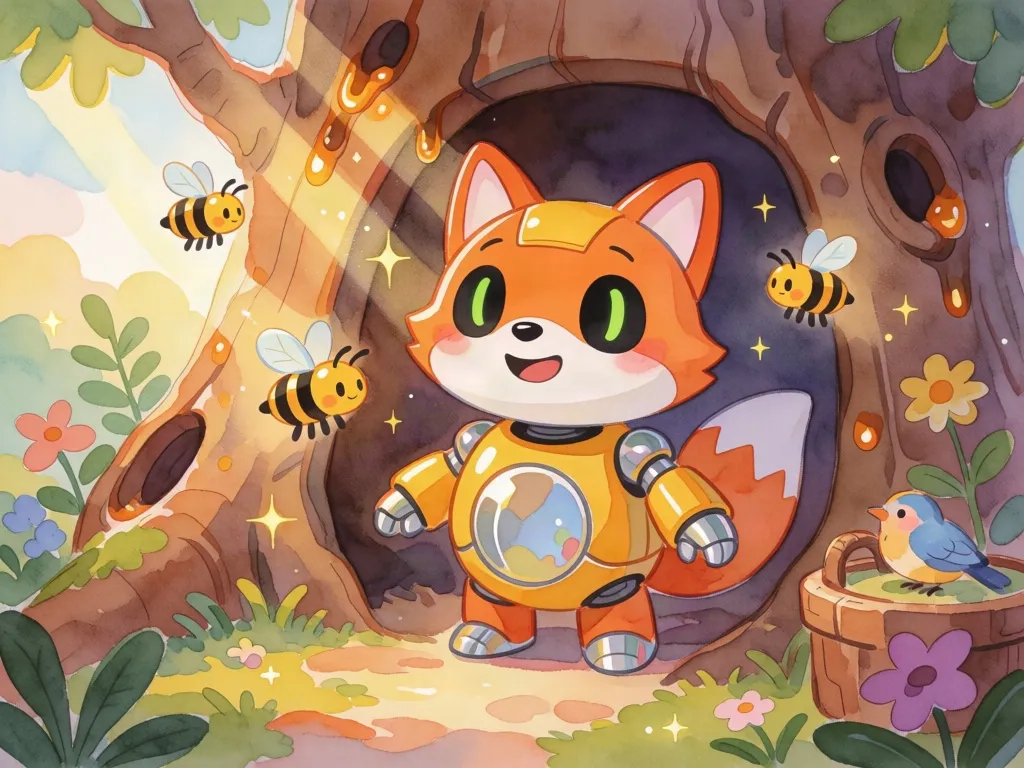
Read children story - Jax the Robo-Fox and the Big Honey Pop
Jax the robo-fox eats too much honey inside a hollow oak and gets stuck! Can tiny buzzing robo-bees tickle him free? A sweet sci-fi bedtime tale for toddlers.
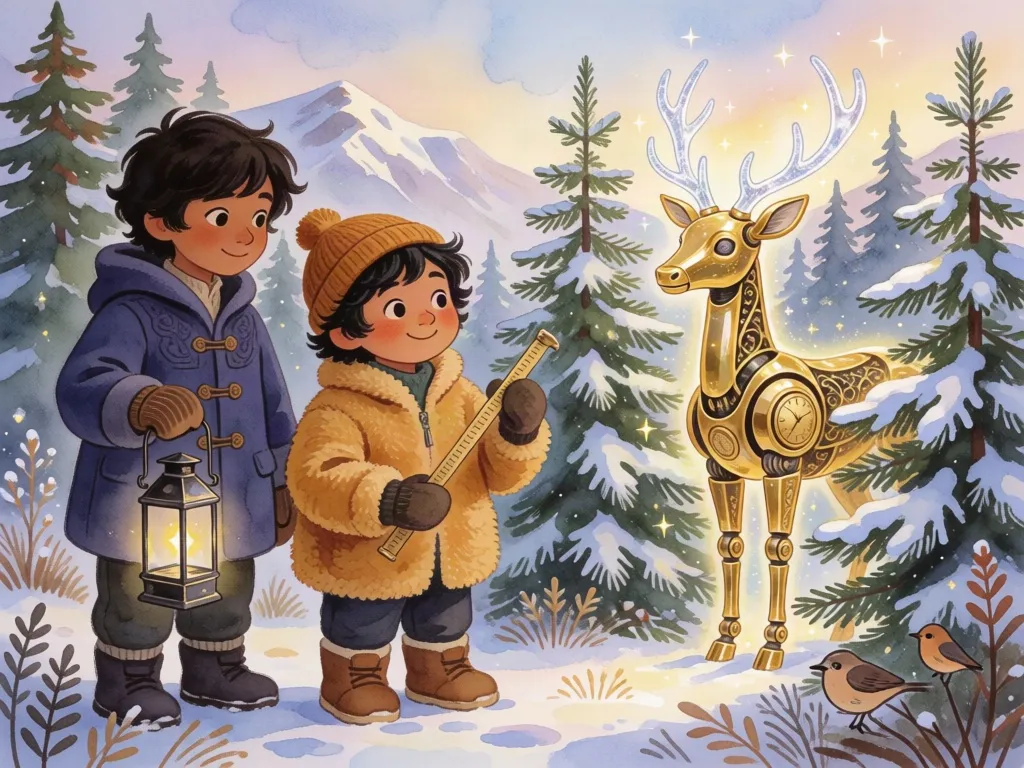
Read children story - The Clockwork Hart of Mount Shishir
Two brave brothers race a golden clockwork deer up Mount Shishir to rekindle the sun. Can their quick wits and teamwork save their frozen mountain home in time?

Read children story - Leo and the Mountain Gearbox
Can young inventor Leo build a clever gearbox for his soapbox racer and conquer steep Mount Thistle? A fun STEM adventure about torque and perseverance!
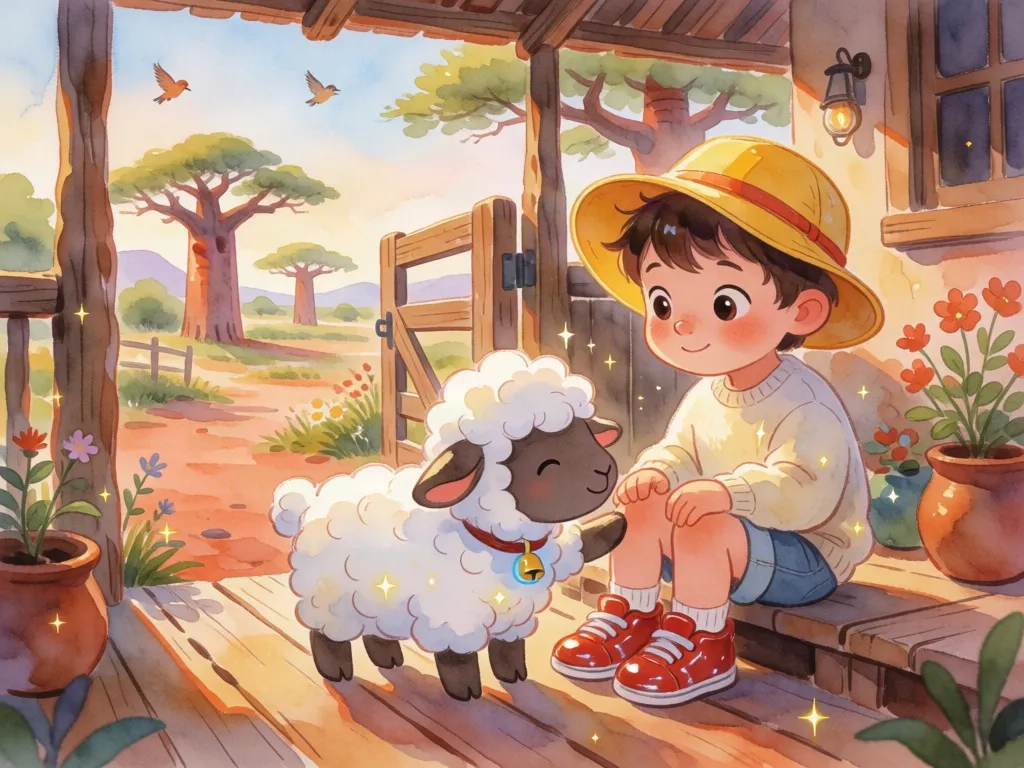
Read children story - Pip and the Sunset Savanna
Join Pip the sheep on a sunset savanna walk as he helps restless Leo slow down and drift into cozy sleep. The perfect soothing bedtime story for ages 4-6.
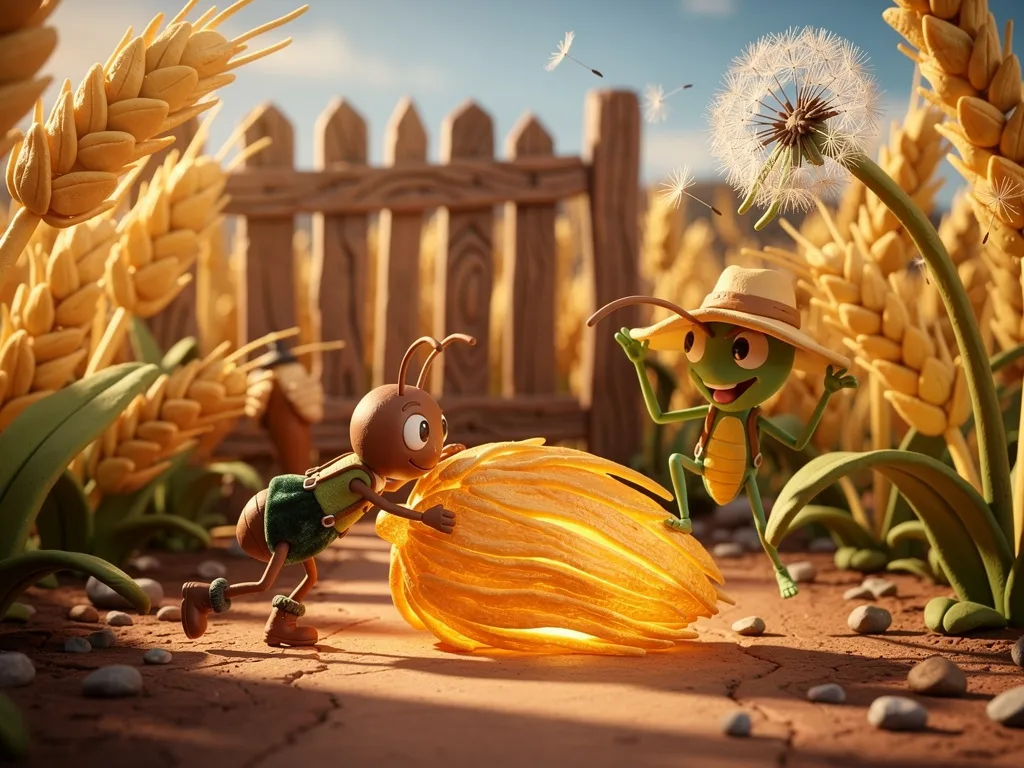
Read children story - Pip's One-Grain Parade
Pip the serious ant must roll a giant wheat grain home before dinner, but a silly grasshopper's shortcut creates hilarious chaos in this funny insect adventure!
Read children story - Priya and the Lightning Rover
When kinetic hero Priya crashes her rover in a sudden flood, can Aria's portable library and quick thinking help deliver vital medicine before time runs out?