
08 Mar 2025 · 4-minute read · STEM+C

Maya, Liam, and Noah weren't your average ten-year-olds. They were time-travelers – well, sort of. Their treehouse, a quirky invention built by Maya's eccentric grandpa, Professor Chrono, could transport them to different eras. Their latest adventure had landed them in the bustling streets of ancient Rome, a trip filled with delicious grapes, surprisingly advanced plumbing, and a near-miss with a chariot race.
Now, back in their own time, they faced a new challenge. Their beloved treehouse was fading, pixelating like an old video game, disappearing bit by bit. Professor Chrono's instructions, a cryptic note, only mentioned the 'Hourglass of Time,' a device needed to stabilize their time-travel contraption. The note contained a riddle:
"Where logic flows, and circuits glow, seek the sands that make time slow. Find the last hour, before all is lost, or the treehouse becomes a ghostly frost."
Liam, the tech whiz of the trio, immediately grabbed his tablet. "This sounds like a coding puzzle!" he exclaimed. He’d been learning Scratch, a visual programming language, and thought the riddle might hold a secret code. He started experimenting, inputting different combinations of words and letters based on the riddle, hoping to unlock a hidden message or clue.
Meanwhile, Maya, known for her creative problem-solving, examined the treehouse's remaining structure. She noticed tiny, shimmering particles escaping like digital dust. "It's like a corrupted computer file!" she said. Her hypothesis was that the time travel mechanism relied on a synchronization system, and if one part failed, the whole thing would decay.
Noah, a meticulous planner who loved building things, checked the blueprint Professor Chrono left behind. It was complex, filled with diagrams of gears, circuits, and strangely labeled components like 'Chroniton Flux Capacitor' and 'Temporal Stabilizer 5000.' He meticulously compared the blueprint with the treehouse's current state, searching for discrepancies that would indicate the missing part.
Liam, after hours of coding, decoded a part of the riddle. It hinted towards a location — their school's robotics lab. He immediately informed the other two. There, surrounded by robots, they discovered a hidden compartment in the coding station where the class kept their old project work. Inside, lay a familiar old-fashioned hourglass, half filled with shimmering silver sand.
But this wasn't just any hourglass; it had a small, glowing LED screen at the bottom. On it appeared another simple code that needed solving. The code, written in binary (a system with only 0s and 1s), showed the sequence 10110010. Thinking creatively, they realised that this was a set of binary codes. Liam found a simple binary-to-decimal converter online to decipher the code which revealed that 186 represented the number of steps from a specific point in the lab.
They carefully followed the hidden instructions, measuring exact steps from the doorway by marking each on the floor before stepping onto the next mark. After counting 186 steps, they found a small, almost invisible lever tucked beneath the robotics station. They pulled the lever revealing a hidden access door. Inside waited the last remaining 'Hourglass of Time', pulsating with a faint blue light.
Teamwork and creative problem-solving can overcome any obstacle. Learning and applying STEM skills can be fun and rewarding.
Story theme is Time travel, problem-solving, teamwork, STEM+C integration
Originally published on StoryBee. © 2026 StoryBee Inc. All rights reserved.
0 likes
Racing back to the treehouse, they carefully slotted the restored hourglasses into the device. The treehouse started stabilizing, the pixelation disappearing, its form solidifying. With a final hum, the treehouse was whole once more.
Their adventure had taught them more than just time travel. They learned to work as a team, using their individual skills—coding, creative problem-solving, and meticulous planning—to overcome obstacles. They also understood valuable concepts about algorithms, problem-solving frameworks, and the basic principles of computers.
The next day at school they even helped their classmates in their own code-breaking competition and improved their teamwork significantly. They understood that not just STEM but also C – Collaboration was essential for complex puzzle-solving. Later, they created a presentation on their time-travel adventure, a perfect synthesis of their STEM+C skills, showing others how exciting learning could be.
Read children story - The Tempest Cup of Dragon Key
When a fierce storm ruins their outdoor stage, Roo the kangaroo and his friends improvise an epic soccer play in the rain to save their meadow sanctuary.
Read children story - Pol and the Giant Polka-Dot Shell
Join little Pol and baby dino Pip on an enchanting fairy-tale adventure through pink mud and giant ferns to find their cozy treetop nest before nightfall!
Read children story - Ethan and the Moon Mountain Rescue
Join young space explorer Ethan as he races his sturdy yellow dump truck up a sandbox hill to rescue his toy dinosaur before garden sprinklers rain down!
Read children story - Kiaden and the Sovereign of the Floating Pipes
Join nimble acrobat Kiaden as he vaults across floating pipes and enchanted stone platforms to outwit Bellow-Toad and rescue the singing crown!
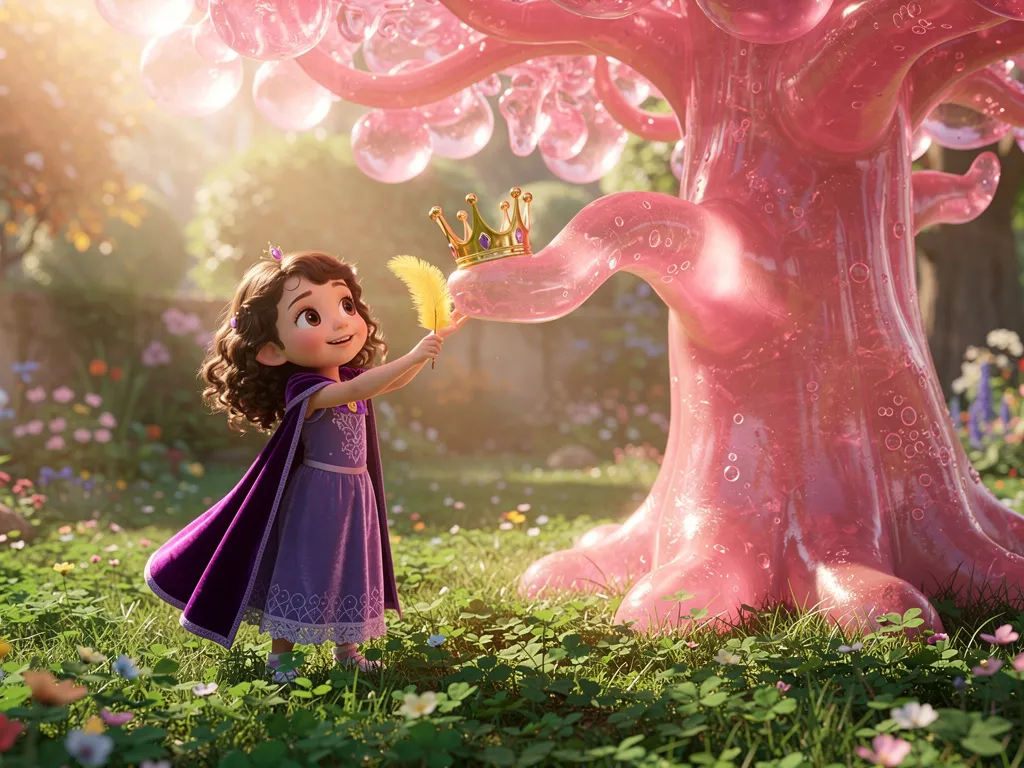
Read children story - Maya and the Wobbly Jelly Tree
When Maya's shiny golden crown gets stuck in a giggly, wobbly pink jelly tree, she must use creative thinking to retrieve it before the castle parade starts!
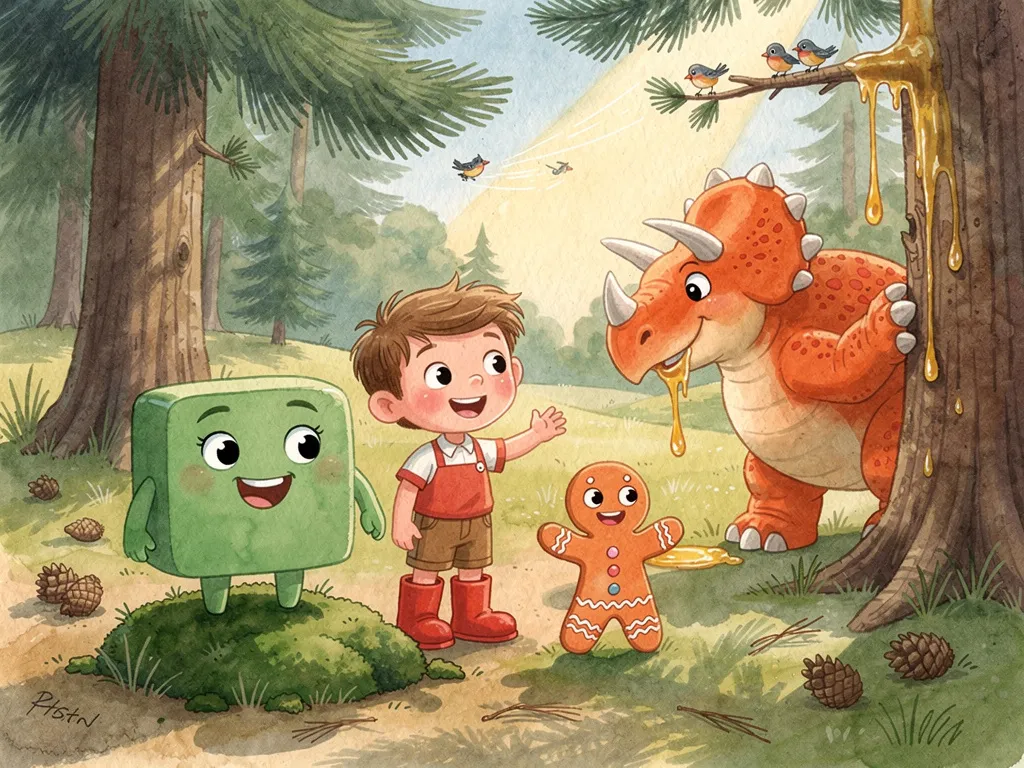
Read children story - The Big Green Pop in the Pine Park
When Gingy the gingerbread man breaks an arm, Pip, Red, and Trike find sticky pine sap to help their friend in this gentle, sweet forest nature adventure.