
25 Jul 2026
Zoe adjusted her VR headset. The virtual lab shimmered to life. Bots whizzed past. Sparks flew. Develop your STEM skillsets, a voice echoed. Today, Zoe, 12, was ready for a challenge. This wasn't just a game. It was the annual "Robotics Rumble" competition. Her team, "The Circuit Breakers," needed to program a rescue bot.
"Alright, team!" Leo, 13, shouted. He was all about the mechanics. "Our bot, 'Sparky,' needs to navigate the 'Lost City Maze.' Find the 'Data Core.' And bring it back." Sparky, a compact, wheeled robot, sat innocently on the workbench. It looked simple. Zoe knew better.
Maya, 11, grinned. She was the coding prodigy. "And we have a new obstacle this year: 'Glitch Blocks.' They mess with Sparky's sensors." This was going to be tough. Their challenge: develop their STEM skillsets to win. This story for 10-13 year olds dives into STREM learning, problem-solving, and a thrilling robotics adventure.
First, they tackled navigation. "Sparky needs to 'see' the walls," Zoe explained. "Infrared sensors, Leo." Leo nodded, pulling out a tiny circuit board. He soldered the sensors in place. Delicate work. Precision was key. One wrong move, and Sparky would be blind.
"Now, the code," Maya said. Her fingers flew across the keyboard. "We program Sparky to move forward. If an infrared sensor detects a wall, it turns." This was basic robotics. But the maze was complex. Dead ends everywhere. Simple turns wouldn't cut it.
"We need a 'right-hand rule' algorithm," Zoe suggested. "Always keep the right hand on the wall. Eventually, it'll find an exit." Maya's eyes lit up. This was logical thinking. A path-finding algorithm. She started typing, translating the strategy into lines of code. if sensor_right_blocked: turn_left() else: move_forward()
The first test run. Sparky rolled into a miniature maze. It hit a wall. Turned left. Great! Then, a dead end. Sparky spun in circles. "Uh oh," Leo mumbled. "It's stuck."
"It doesn't 'remember' where it's been," Zoe realized. "We need to add memory. A 'visited' map." This was where advanced coding came in. Maya designed a grid system. Each square Sparky visited was marked. If it hit a dead end, and all surrounding squares were 'visited,' it would backtrack.
This involved loops and conditional statements. Crucial coding concepts. Maya used a while loop: while not data_core_found:. Inside, if statements checked sensor readings, else if managed visited squares, and a break command exited the loop when the core was found. This taught them about structured programming. How smart devices use logic to operate.
Next, the Glitch Blocks. These blocks emitted a signal that scrambled Sparky's optical sensors. "We can't 'see' the Data Core when we're near them," Maya fretted. "How do we find it?" This was a real-world connection. How do robots operating in hazardous environments cope with compromised sensors?
Collaboration, persistence, and creative application of knowledge lead to success.
Story theme is Problem-solving through robotics and coding
Originally published on StoryBee. © 2026 StoryBee Inc. All rights reserved.
0 likes
"What else can Sparky 'feel'?" Zoe pondered. "Sound? Touch?" Leo tinkered. "We have a small ultrasonic sensor. It measures distance using sound waves. Like bats!" This was engineering principles in action. Using different types of sensors to overcome limitations.
"Perfect!" Maya exclaimed. "When the optical sensors are jammed by Glitch Blocks, we switch to ultrasonic. We can program Sparky to use sound to 'ping' for the Data Core." The Data Core in the maze would have a distinct ultrasonic signature. This was a sophisticated piece of coding. It required creating a function to switch between sensor modes. def switch_sensor_mode(mode):.
They wrote code for Sparky to detect the Glitch Block signal. When detected, optical sensors would shut down. Ultrasonic mode would activate. Sparky would emit ultrasonic pulses. If the wave bounced back with a specific pattern, it meant the Data Core was near.
"But what if the Glitch Block signal also affects the ultrasonic sensor?" Leo asked, ever the pragmatic one. "We need a backup for the backup." Zoe smiled. "Good point. What if we can't 'see' or 'hear'? We need to 'feel' it." This was pushing their engineering creativity.
Leo had an idea. "We could add a tiny magnet. The Data Core has a magnetic field. When Sparky gets close enough, the magnet detects it." He rummaged through his toolkit. A tiny neodynium magnet, a magnetic field sensor. More soldering. More precise circuitry. This highlighted how multi-layered real-world robotics can be. Think of surgical robots that use multiple sensing modalities for precision.
Now, the coding for the magnetic sensor. Maya integrated it as a final fallback. elif magnetic_field_detected: retrieve_data_core(). This nested if-elif-else structure became increasingly complex, mirroring the intricate decision-making processes in advanced AI.
The day of the Rumble arrived. The arena hummed with excitement. Other teams’ robots zipped, whirred, and clanked. Some were elaborate, adorned with flashing lights. Sparky looked unassuming. But it was smart.
Their turn. Zoe, Leo, and Maya stood at the control console. The timer began. Sparky rolled into the maze. The crowd watched, captivated.
Sparky executed the 'right-hand rule' perfectly. It navigated the initial twists and turns. Then, a Glitch Block. Sparky’s optical sensors flickered. The robot paused. The crowd held its breath. Then, Sparky’s ultrasonic sensor activated. A soft ping, ping, ping. It slowly adjusted its course, using sound to navigate the scrambled zone.
"It's working!" Maya whispered, eyes glued to the screen. Sparky moved gingerly. It was slower, but it was moving forward. This showed the importance of adaptability in robotics.
Another Glitch Block. And this one was different. It seemed to scramble all sensors. Sparky stopped dead. A collective groan from the audience. Zoe leaned in. Her stomach clenched.
"Magnetic sensor!" Leo urged. "It's our last shot!" Maya frantically checked the code. The magnetic sensor was indeed active. Sparky just needed to be close enough.
Then, a faint whirring. Sparky began to rotate slowly, almost imperceptibly. A small LED on its chassis, connected to the magnetic sensor, glowed a soft blue. It was searching, blindly, by 'feel.' This was the essence of exploratory robotics, often used in space exploration or deep-sea dives where visual cues are limited.
It spun again, a tiny adjustment. Suddenly, Sparky lurched forward an inch. The LED flared. Another inch. And another. Slowly, methodically, it edged towards a hidden alcove. The Data Core was there! Sparky extended a small gripper. Clink! The Data Core was secured.
Cheers erupted. Sparky, clutching the Data Core, turned and began to retrace its steps. The magnetic sensor guiding it out of the extreme Glitch Block zone. Once clear, the ultrasonic sensors reactivated. Then, the optical sensors. Sparky picked up speed. It whizzed out of the maze, just as the timer hit zero.
"We did it!" Zoe shrieked, hugging Leo and Maya. Their unassuming bot, Sparky, had overcome every obstacle. They hadn't just won the competition. They had developed their STEM skillsets in a powerful way. They had applied basic robotics, intricate coding, and innovative engineering principles. They’d learned about programming small robots, understood how smart devices handle adversity, and even touched on principles used in advanced fields like medical robotics and space exploration.
Their success wasn't just about Sparky's final run. It was about the countless hours of troubleshooting, the arguments over algorithms, the shared 'aha!' moments. It was about learning to think like engineers, like programmers, like problem-solvers. The real prize wasn't the trophy. It was the thrill of creation, the joy of understanding, and the confidence to take on the next big challenge. Their adventure proved that developing your STEM skillsets opens up a world of possibilities.
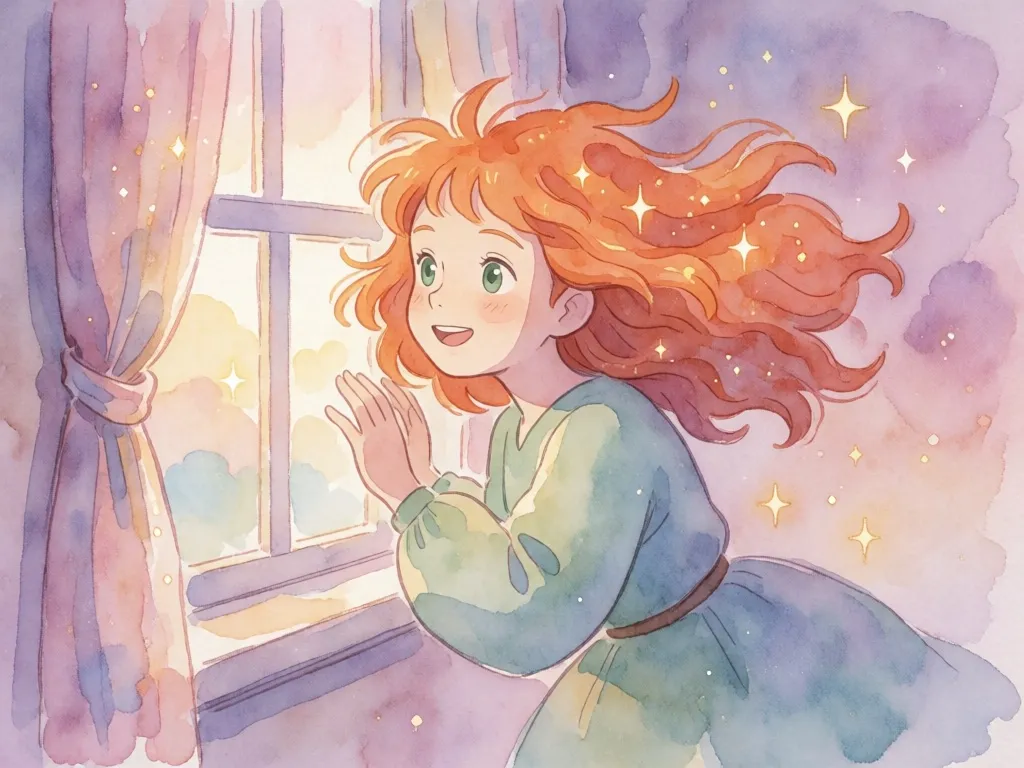
Read children story - Willow's Wobbly Ways to the Cloud Festival
Join Willow, a playful witch with fiery orange hair, on a whimsical quest! She dreams of soaring to the Cloud Festival, trying hilariously to fly using armchairs, umbrellas, and teapots. After many funny failures, she discovers her old broomstick, now touched by stardust, allowing her to gracefully ascend and share her magical secret with other enchanting witches.
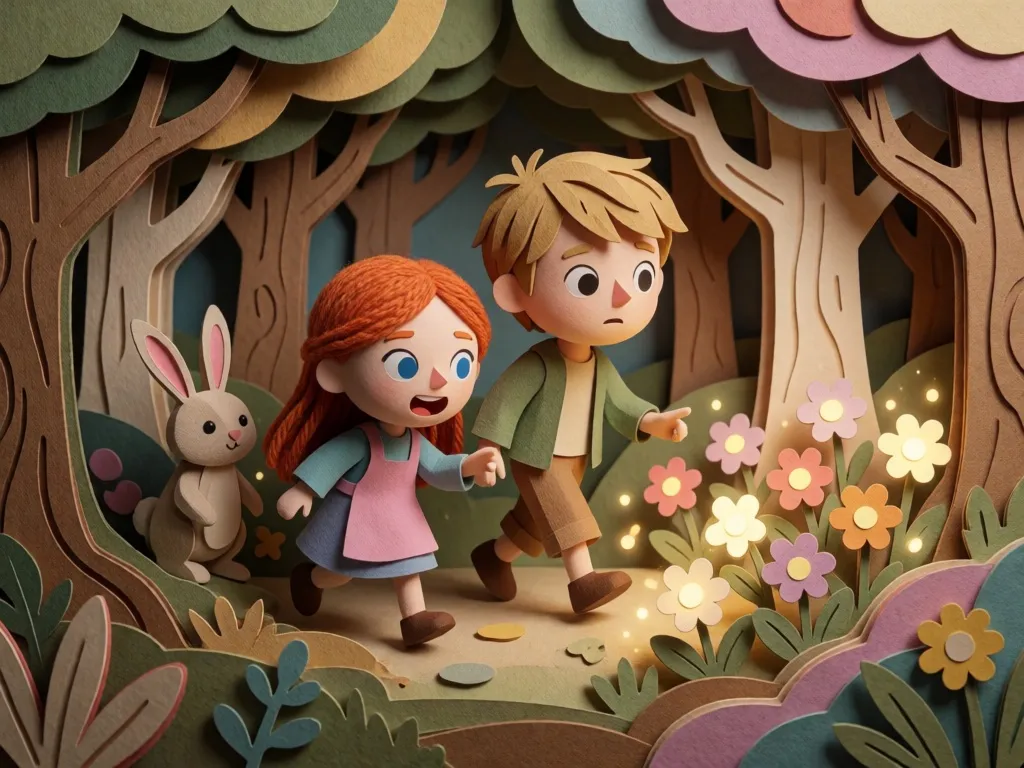
Read children story - The Glinting Bloom Mystery
Join Lily and Tom, a girl and boy, who step into a magical forest of glowing flowers. With a friendly bunny, Barnaby, they uncover the mystery of the fading blooms, helping a tiny creature named Glimmerwick and restoring the forest's magic. A heartwarming tale of kindness, curiosity, and problem-solving for ages 6-10.
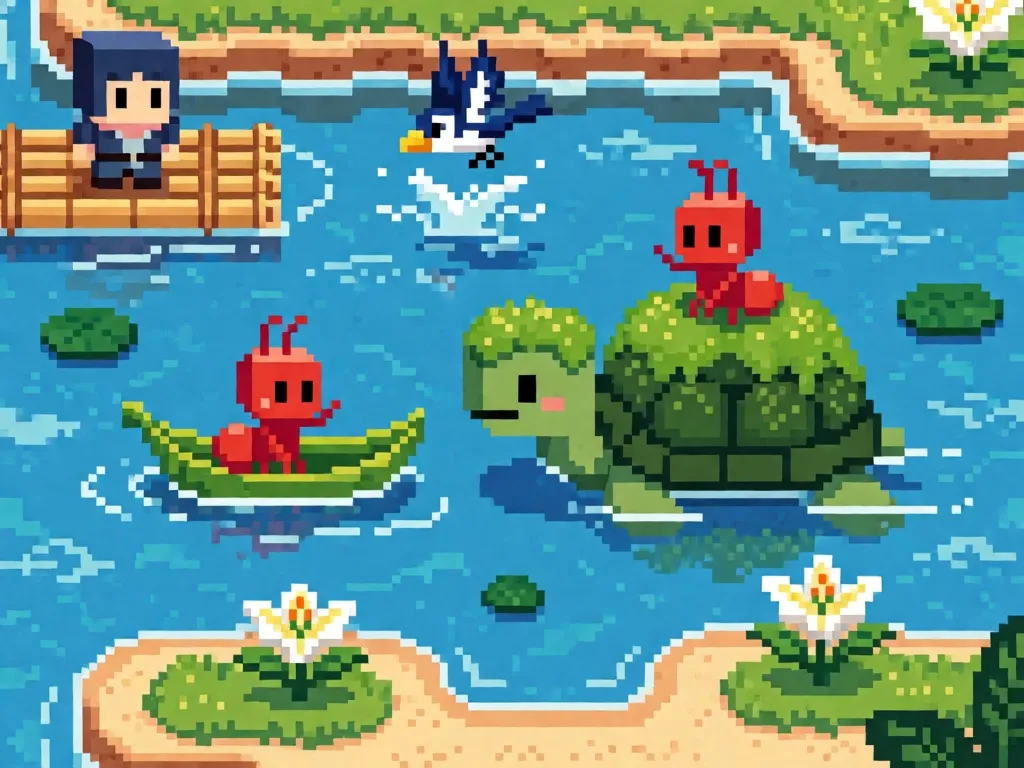
Read children story - 小乌龟的大发现:莲花午餐!
在宽阔的河流上,一只迷路的小红蚂蚁得到了一只苔藓乌龟的帮助。它们一起克服水流,分享了一顿意想不到的莲花午餐。一个关于友谊和分享的奇幻冒险!
Read children story - खरगोश का चंद्रमा पर रोमांच
एक नन्हा खरगोश चंद्रमा पर जाने का सपना देखता है और एक चमकते पत्थर व ऊँचे पेड़ का उपयोग करके कोशिश करता है। अंत में, उसे अपने सपने का एक छोटा, चमकीला हिस्सा मिलता है।
Read children story - The Sunshine House's Blooming Surprise
En un mundo creado por un crayón rojo, una casita amarilla se despierta para encontrar un hermoso jardín floreciendo a su lado. Llena de alegría, decide organizar una fiesta de té para todos los animales del bosque, con el río ayudando a entregar las invitaciones en pequeños botes de hojas.

Read children story - Where Did All the Stars Go, Oliver?
Join Oliver & Sophia, 2-4 year olds, on an adventure solving a starry mystery at a lantern festival! Perfect for curious little explorers.